Dryer vent and air duct cleaning in Phoenix
We cover the whole city, from the historic districts around Encanto out to Desert Ridge, Ahwatukee, and Laveen. Dryer vents are $129 flat, duct cleaning starts at $449 per system, and every job produces before-and-after camera footage. Phoenix housing stock spans about eighty years, so what your home actually needs depends a great deal on when it was built.
- Before-and-after camera proof on every job
- Same published price across the metro
- 90-day guarantee
What we clean in Phoenix
- Dryer vent cleaning
$129 per job
- Air duct cleaning
$449 per system
- Air duct and dryer vent cleaning
$499 per job
- Roof and second-floor dryer vent cleaning
$179 per job
- Chimney sweep
$199 per job
- Commercial and multi-unit dryer vent cleaning
$89 per unit
Phoenix homes, and what that means for the work
Phoenix is not one housing market, it is several stacked on top of each other, and that changes the work more here than in any other city we serve. The historic districts ringing downtown (Willo, Coronado, Encanto-Palmcroft, F.Q. Story, Garfield) are largely 1920s through 1940s homes, many with later retrofitted cooling and ductwork that was added to a building never designed for it. The post-war belt, Maryvale most famously, is 1950s and 1960s tract housing: single story, low-slope roofs, short straight duct runs, and the highest concentration of evaporative coolers still in service. Then the outward growth brings two-story floor plans, tile roofs, upstairs laundry rooms, and flexible duct run through unconditioned attics. A dryer vent job in Willo and a dryer vent job in Desert Ridge are genuinely different jobs, and we price and schedule them differently.
No on-site upsells. The technician earns nothing on add-ons.
Phoenix area by area: what your home probably needs
The build year predicts the work better than the address does. Find yours below.
-
Downtown historic districts
1920s–1940s
Pre-war bungalows and period revival, cooling added later
Retrofitted ductwork with non-standard runs. Often worth documenting even when not worth cleaning.
-
Maryvale and the post-war belt
1950s–1960s
Single-story tract, low-slope roofs
Standard wall-exit dryer vent at $129. Evaporative coolers still common.
-
Arcadia
1950s onward, heavily remodeled
Ranch homes on large lots, many renovated
If a remodel ran with the system on, that is post-construction duct cleaning rather than routine.
-
Ahwatukee
1970s–1990s
Two-story, upstairs laundry, attic duct runs
Roof-exit dryer vent at $179. Morning-only work in summer.
-
Desert Ridge and the far north Phoenix corridor
Late 1990s–2000s
Two-story tract and semi-custom, tile roofs
Roof exits at $179, flex duct needing air whips, higher supply-vent counts.
-
Deer Valley and north Phoenix
1980s–2000s
Mixed tract stock, single and two-story
Check the laundry location first. Upstairs laundry means a roof exit, ground-floor laundry means the standard wall exit at $129.
-
Laveen
2000s
Newer two-story tract, formerly agricultural land
Newer ductwork, so the question is usually dust from construction or a long upstairs dryer run, not age.
Areas of Phoenix we cover
-
Arcadia
Mid-century homes on larger lots with mature citrus, many extensively remodeled, which is its own duct question.
-
Ahwatukee Foothills
Developed from the 1970s south of South Mountain. Two-story stock with upstairs laundry and roof-exit dryer vents.
-
Desert Ridge
Late-1990s and 2000s master planning. Tile roofs, flex duct through hot attics, roof-exit vents.
-
Willo and the downtown historic districts
1920s to 1940s homes where cooling and ductwork were retrofitted decades after construction.
-
North Central and Sunnyslope
A wide mix of eras along the central corridor, so the build year matters more than the address.
-
Maryvale
Post-war tract housing from the mid-1950s. Single story, short straight runs, evaporative coolers still in service.
-
Laveen
Formerly agricultural, built out heavily through the 2000s. Newer two-story stock and newer ductwork.
-
Deer Valley
Mixed north Phoenix stock spanning several decades, including a lot of 1990s and 2000s tract building.
Phoenix is large enough that we batch by area rather than crossing the city twice in a day. Central, north central, and the historic districts are usually offered morning and midday windows. Ahwatukee, Laveen, and the far north Phoenix corridor are batched into their own blocks, so if your preferred day is tight, ask and we will tell you honestly which windows are realistic rather than promising one we will miss.
What makes Phoenix different
Evaporative coolers are still in service on older stock
Central and west Phoenix, particularly the post-war tract neighborhoods, retain a meaningful number of evaporative coolers alongside or instead of refrigerated air. That changes what ductwork is doing and how moisture moves through a house. We do not currently service evaporative coolers, and we will tell you plainly when what you have is a cooler question rather than a duct question.
Historic districts have retrofitted ductwork
Homes built before central air was standard had cooling added later, often in tight attics or through soffits and closets. Access is harder, runs are frequently non-standard, and we find more disconnected or improvised connections here than anywhere else in the metro.
Newer north and south Phoenix means roof-exit dryer vents
Two-story homes in Desert Ridge, Laveen, and the north Phoenix corridor usually put laundry upstairs, which sends the dryer duct through the attic to a roof cap. That is the roof-exit price rather than the standard one, and it is a morning-only job in summer.
Attic ductwork across nearly all stock
Very few Phoenix homes have basements, so ductwork runs through unconditioned attic space. Summer attic temperatures set our scheduling, and flexible duct requires air whips rather than rotary brushes to avoid tearing the liner.
What your Phoenix home probably needs
The most useful question in this city is not “when was it last cleaned” but “when was it built.”
Pre-war, downtown and the historic districts. Cooling and ductwork were added to these homes decades after they were built, which means runs that were improvised around an existing structure. We find more disconnected branches, more non-standard connections, and tighter access here than anywhere else in the metro. Duct work in these homes is often worth documenting even when it is not worth cleaning.
Post-war tract housing, Maryvale and the central belt. Single story, short straight duct runs, and dryer vents that usually exit through a wall at ground level. This is the simplest and cheapest version of our work, and it is also where evaporative coolers are still in service. If your home has one, ask us about the duct side and expect us to decline the cooler itself.
Ahwatukee, Desert Ridge, Laveen, north Phoenix. Two stories, tile roofs, upstairs laundry, and flexible duct through hot attics. Dryer vents here are usually roof exits, which is the $179 price rather than $129. Attic and roof work is scheduled in the morning from roughly May through September.
Why attic ductwork changes the job in Phoenix
Almost no Phoenix home has a basement. Ductwork runs through the attic, and that has two consequences worth knowing before you book anyone.
The first is the material. Attic distribution here is overwhelmingly flexible duct, a ribbed plastic liner over a wire helix. A stiff rotary brush driven through flex can tear that liner, which turns a cleaning into a repair. Flex needs controlled-pressure air whips instead. A company that brings the same tool to every house in the Valley is going to damage some of them.
The second is the calendar. Valley attic temperatures make summer afternoon work unsafe and hard on materials. From roughly May through September we book attic-heavy and roof-exit jobs in early morning windows, and we would rather move your appointment than send someone into a Phoenix attic at three in the afternoon.
What we will tell you not to buy
Most of what we publish is about when you do not need us, and that applies here as much as anywhere.
Duct cleaning is not a routine maintenance item. The EPA does not recommend cleaning ducts on a schedule, and it states plainly that duct cleaning has never been shown to prevent health problems. The conditions that actually justify it are specific: debris genuinely being released into rooms, vermin, substantial visible mold, or construction dust from a renovation with the system running. Phoenix has a lot of renovation activity, so that last one comes up often and it is legitimate.
Dryer vents are different. That one is genuine annual maintenance for most households, it is the cheaper service, and it is the one we would tell a typical Phoenix homeowner to do first.
Which service fits your situation
- Your dryer takes two cycles, or the laundry room feels hot. Start with dryer vent cleaning. The signs of a clogged dryer vent guide explains what to look for first.
- Your laundry is upstairs. Expect the roof-exit price. See roof and second-floor vents.
- You hear birds in the wall or see nesting material at the hood. That is bird nest removal, and the guide on birds in dryer vents covers why it keeps happening.
- You just closed on a home. Use the new-home checklist before you book anything.
- You got a $79 duct cleaning ad. Read how that deal works first.
- You want to know what duct cleaning costs here. The Phoenix duct cleaning cost guide shows the math, and the dryer vent cost guide does the same for vents.
What a visit looks like
You get the exact price first, a technician confirms it at the door, and the before-and-after proof is on your phone before they leave. The full sequence is on how a visit works, and the requirements every technician has to meet are on our standards.
Job photos from Phoenix
Real photos from our jobs in Phoenix, resized but not retouched.
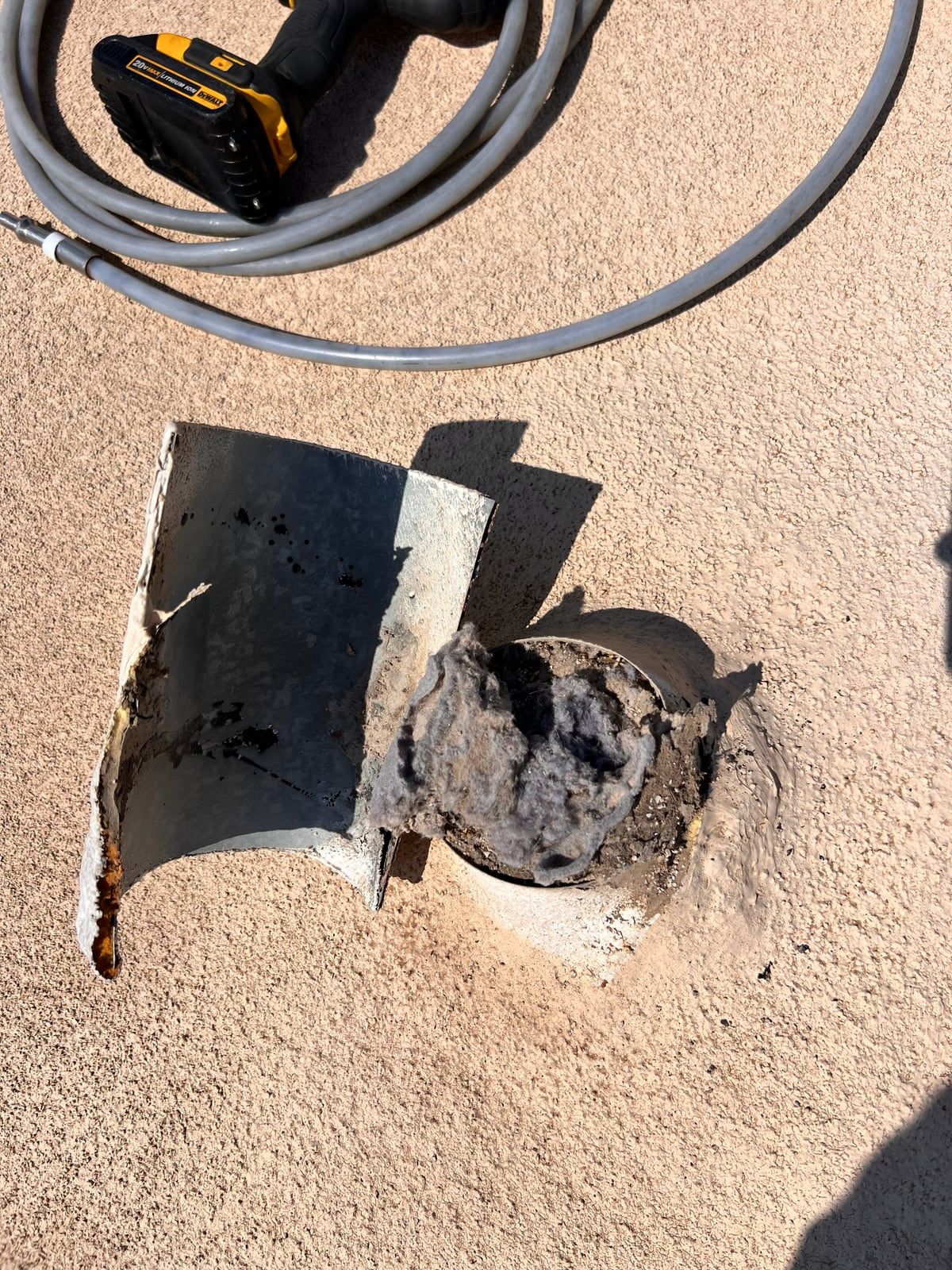
A flat-roof dryer vent with the cap off and the opening packed with lint. Phoenix · August 2026 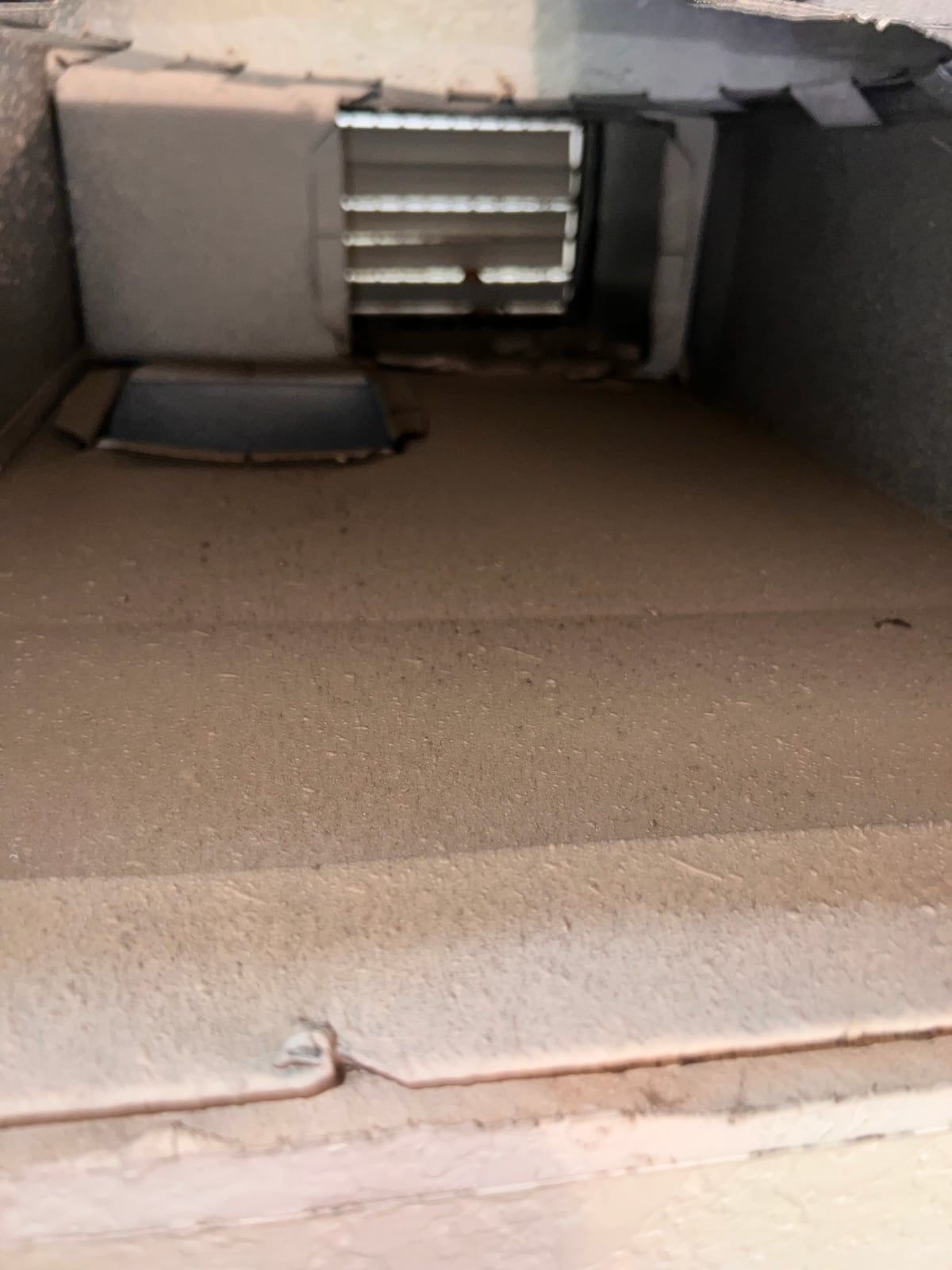
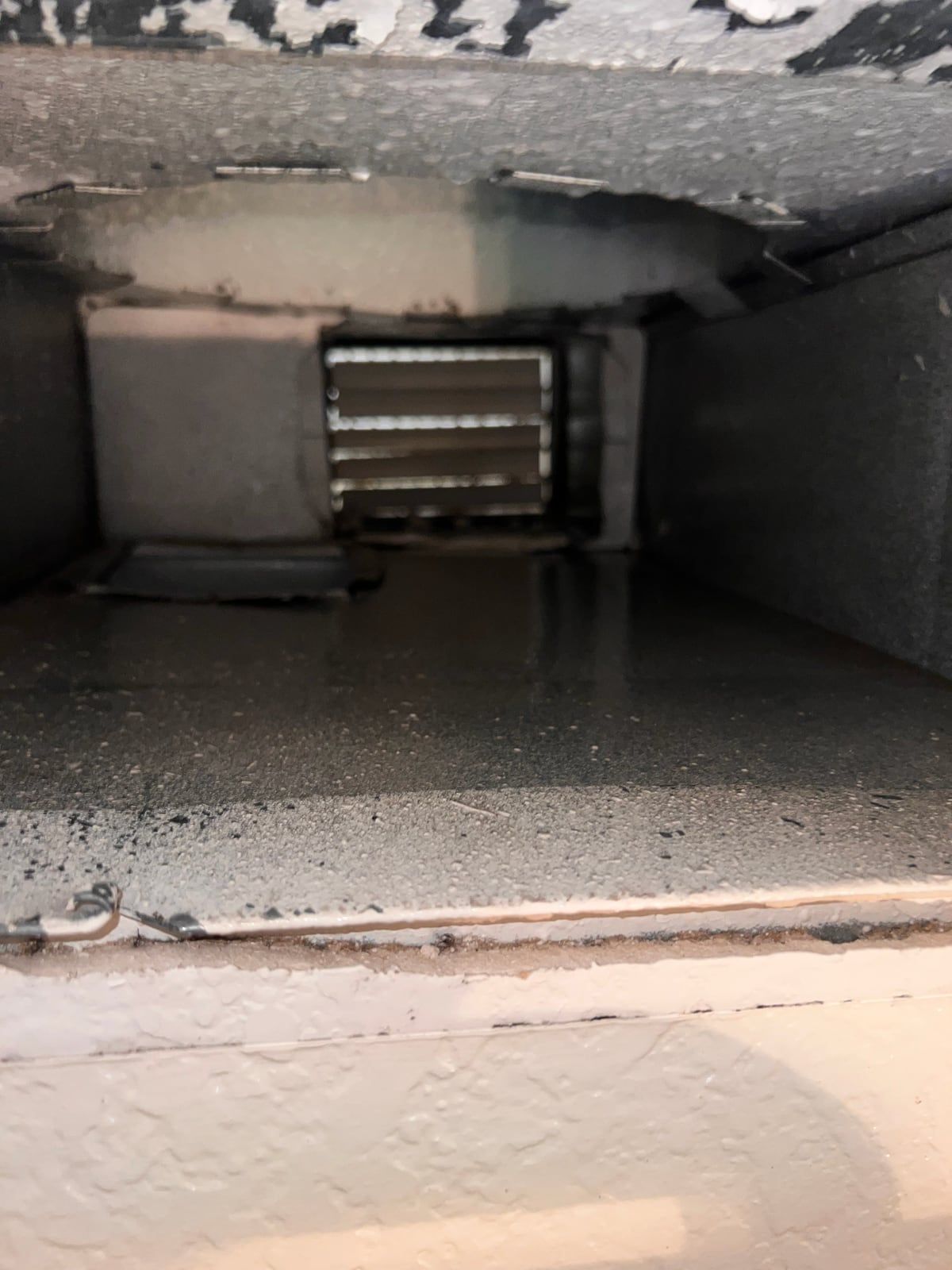
A supply duct with dust coating every surface, then the same run after brushing and vacuuming. Phoenix · May 2026 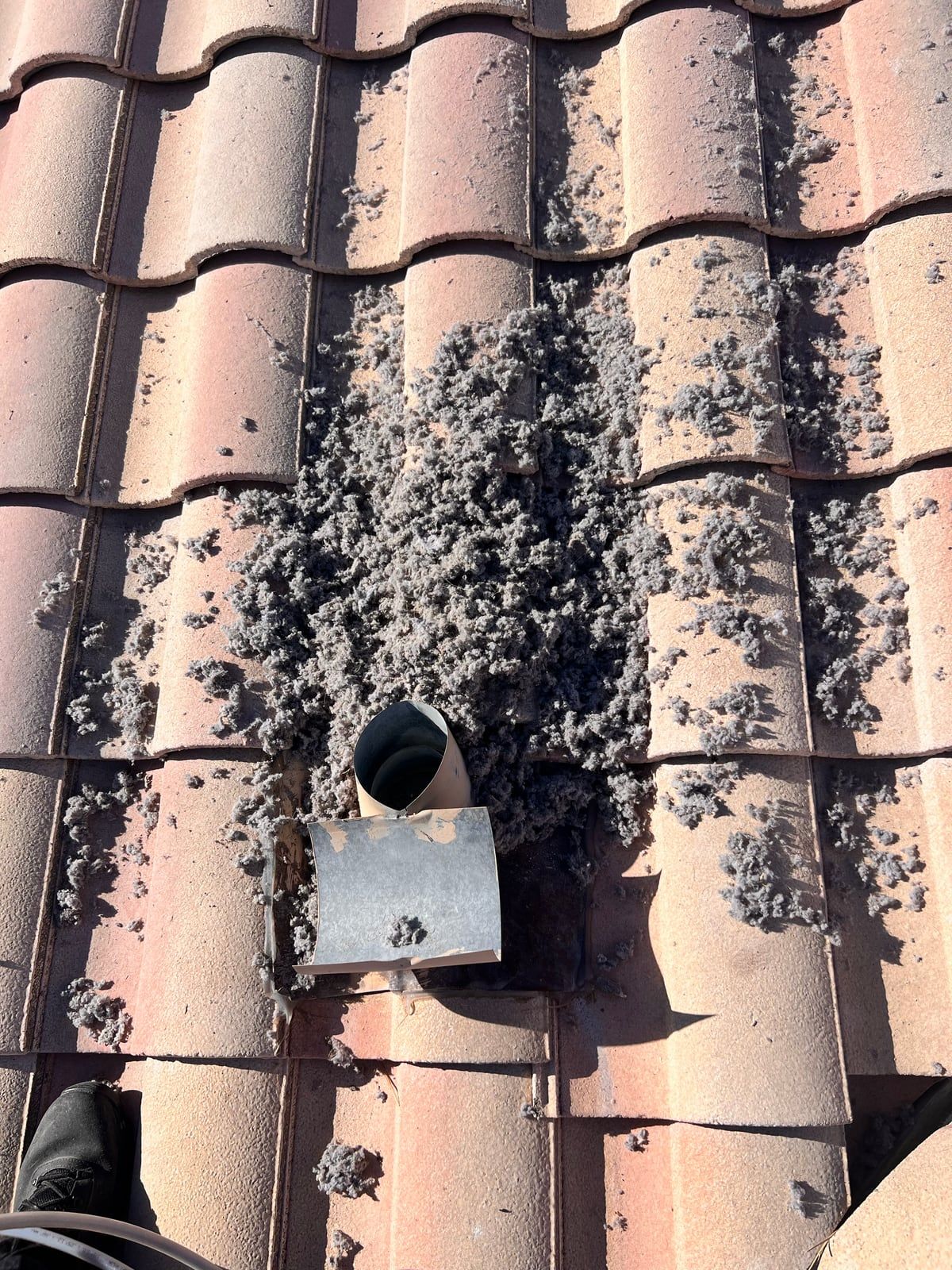
Lint pushed out of a roof dryer vent onto the tile while the run was cleaned. Phoenix · May 2026 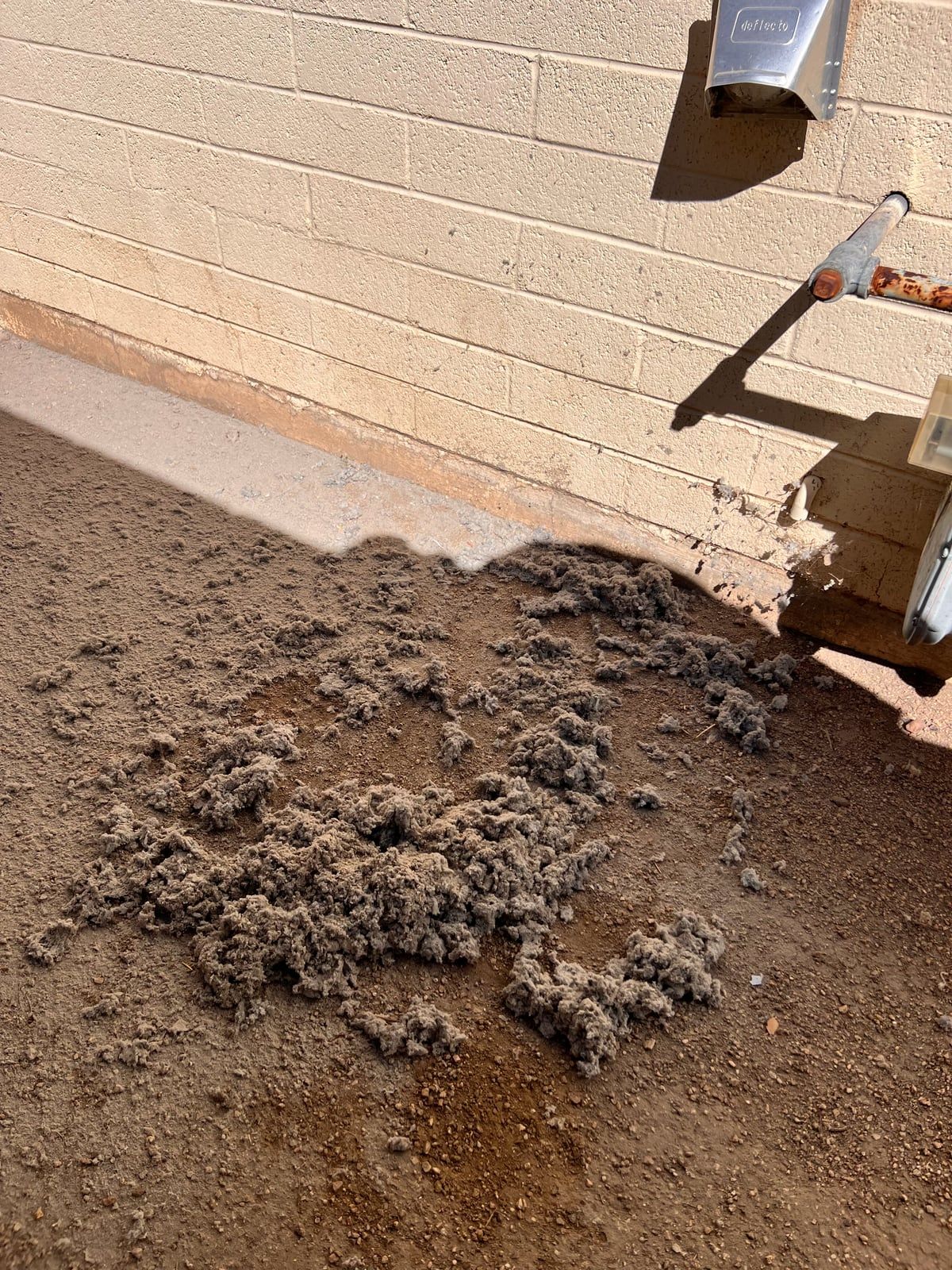
Lint pulled out of a first-floor dryer vent, piled under the exterior hood. Phoenix · March 2026 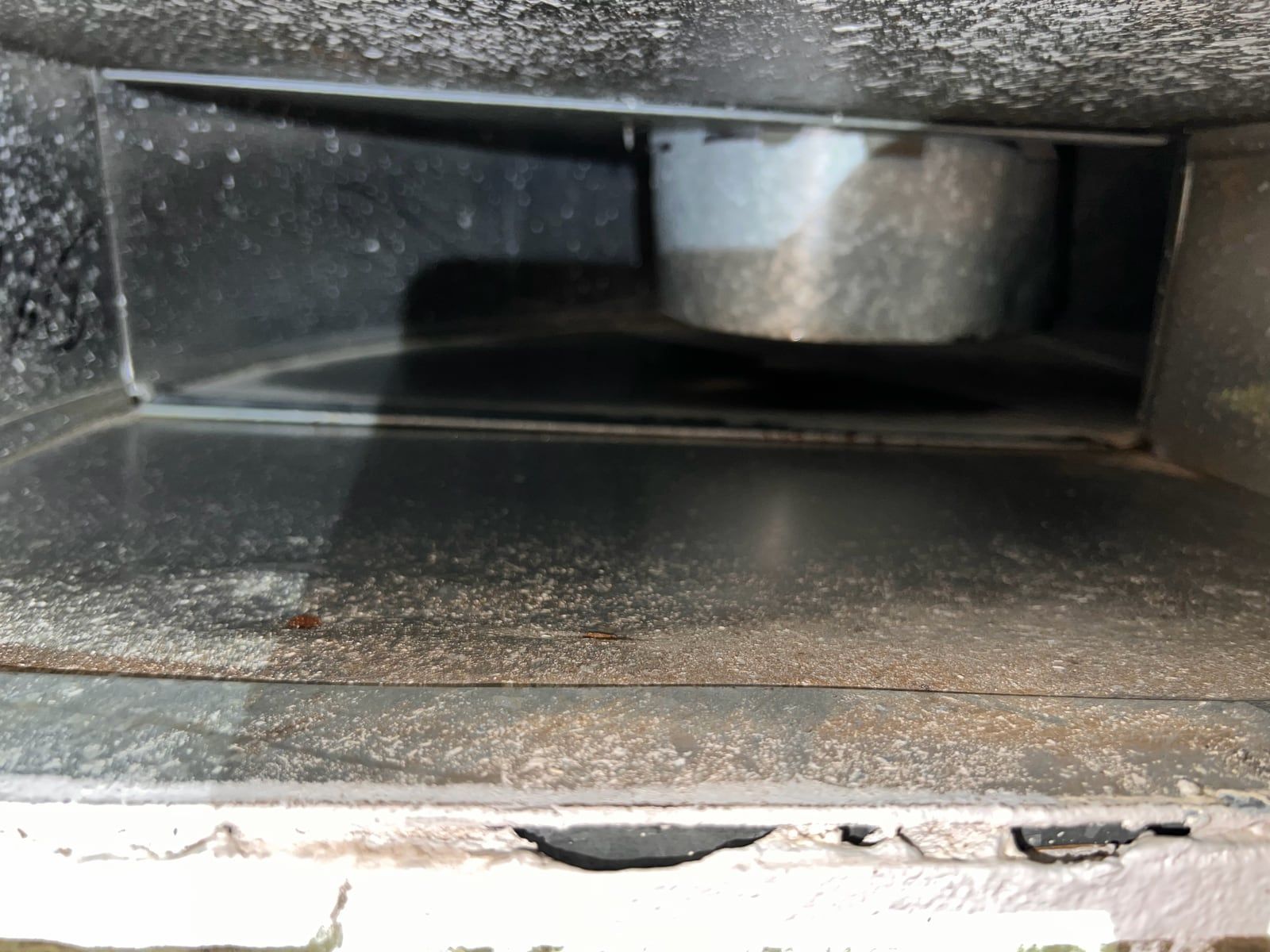
Looking into the supply plenum through a register opening. Phoenix · March 2026
Phoenix questions we get asked
- Do you cover all of Phoenix?
- Yes, the whole city, including Ahwatukee, Laveen, Desert Ridge, Maryvale, North Central, and the downtown historic districts. Pricing is identical everywhere, with no zone surcharge for being further out.
- How much is dryer vent cleaning in Phoenix?
- $129 flat for a standard first-floor wall exit up to 25 feet. A roof or second-floor exit is $179 because it needs roof access. Air duct cleaning starts at $449 for one system with up to 12 supply vents.
- My house is in a historic district. Is that a problem?
- Not a problem, but it is different work. Pre-war homes here had cooling and ductwork added later, so runs are often non-standard and access is tighter. We allow for that, and we are more likely to find something worth photographing, such as a disconnected run or an improvised connection. You will get that in writing either way.
- I have an evaporative cooler. Can you help?
- Not with the cooler itself. We do not currently service evaporative coolers, and we would rather say so than take the booking. If your question is about ductwork or a dryer vent on the same house, that we can do.
- My laundry is upstairs in a two-story home. Which price applies?
- Almost certainly the roof-exit price of $179, because upstairs laundry in newer Phoenix homes normally ducts up through the attic to a roof cap. The technician confirms the exit type at the door, and if it turns out to be a wall exit you pay the lower price.
- How quickly can you get to me in Phoenix?
- It depends on the part of the city and the time of year. We batch by area rather than criss-crossing the metro, so ask when you call and we will give you the windows that are actually realistic for your area rather than the ones that sound best.
- Do you do apartment buildings and rentals in Phoenix?
- Yes. Three or more units on the same property are priced per unit, and every unit gets its own airflow readings and camera footage in one consolidated report.
- How often should I clean my dryer vent in Phoenix?
- Once a year is a sensible default for most households. Heavy laundry, a long upstairs run, or a bird nest changes that. The signs guide and the frequency guide below cover how to tell.
- I just bought a Phoenix home. What should I do first?
- Start with the dryer vent, because it is the cheaper job and the one where a previous owner's lint is a real problem. Ducts are worth a look if the home was renovated with the system running, if there was pest activity, or if you can see debris at the registers. Our move-in duct cleaning page covers the rest.
- Does the price change for a second system?
- Yes. Air duct cleaning starts at $449 for one system with up to 12 supply vents. Extra systems are $299 each and extra vents are $25 each, and the exact number is on your quote before anyone arrives.
- How do you vet your technicians?
- Insurance, a background check, the right equipment for each service, and a shadowed first job. The full list is on our standards page.
Other cities we serve in the Phoenix metro
Book in Phoenix
Published price. Camera proof. No on-site upsells.